
Overview
The September 2026 monthly funding report shows a stronger month for venture investment, with $55.1 billion raised across 592 deals, compared with $44.7 billion across 502 deals in August. Deal volume increased by almost 18%, while total funding rose by approximately 23%, indicating a broader increase in activity alongside several large later-stage financings.
The strongest increases came from Series C, Series D and Series E, while early-stage activity also strengthened. Series A was the main exception: deal volume increased considerably, but the total amount invested declined slightly, pointing to smaller average rounds at this stage.
| Round | Amount August (USD) | Number deals August | Amount September (USD) | Number deals September |
| Pre-seed funding | 168,965,300 | 56 | 295,835,400 | 68 |
| Seed Round | 1,324,013,500 | 147 | 1,429,928,300 | 170 |
| Series A | 4,363,930,000 | 96 | 4,210,133,900 | 116 |
| Series B | 5,387,968,000 | 66 | 5,511,830,000 | 68 |
| Series C | 5,343,477,000 | 34 | 7,711,222,500 | 35 |
| Series D | 3,642,600,000 | 15 | 8,769,000,000 | 13 |
| Series E | 891,000,000 | 7 | 4,821,500,000 | 12 |
| Other | 23,600,146,700 | 81 | 22,378,338,000 | 110 |
| Total | 44,722,097,500 | 502 | 55,127,788,100 | 592 |
Funding Activity by Number of Deals
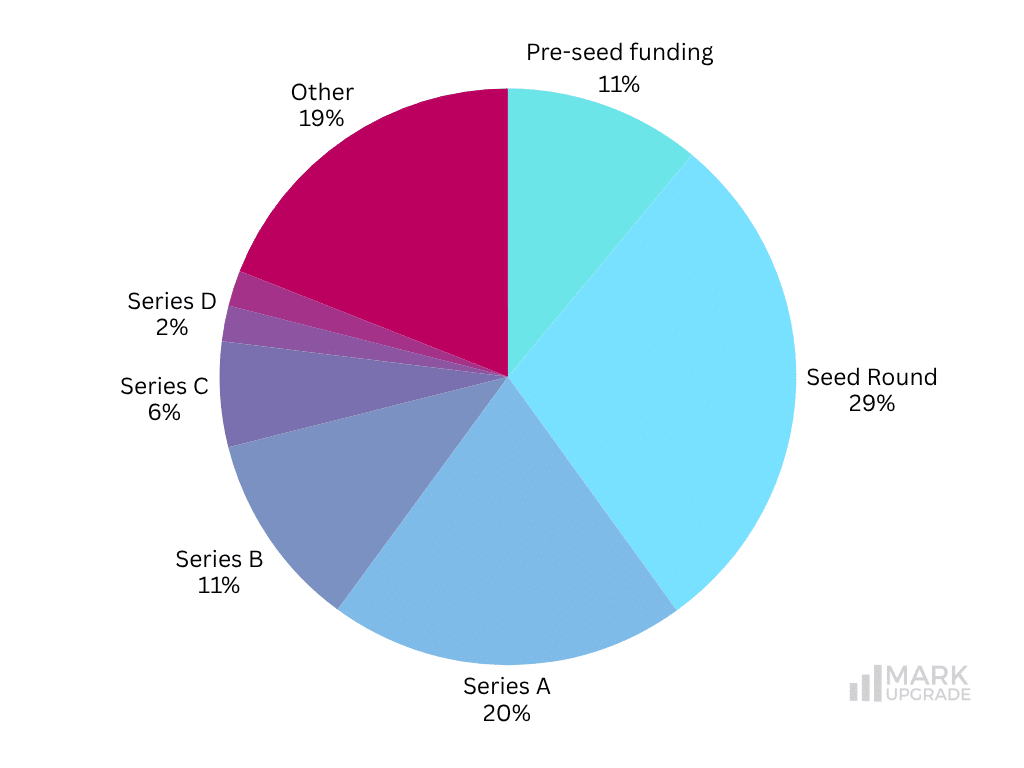
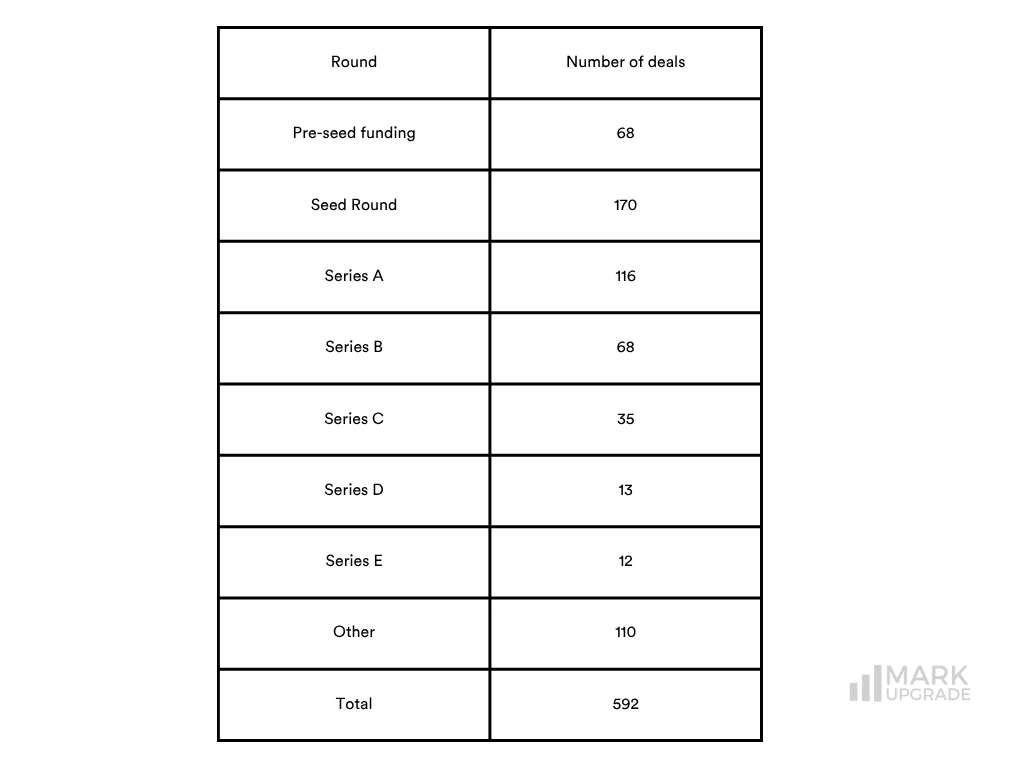
September recorded 592 funding deals, up from 502 in August, with increased activity across most stages.
Key observations
- Seed remained the largest funding category by deal count, increasing from 147 to 170 deals, a rise of approximately 16%. Pre-seed activity also strengthened, rising from 56 to 68 deals, showing continued investor activity at the earliest stages.
- Series A recorded one of the largest increases in deal volume, rising from 96 to 116 deals, or around 21%. This suggests more companies were able to secure institutional funding even though the amount invested at this stage did not increase.
- Series B remained relatively stable, moving from 66 to 68 deals, while Series C increased slightly from 34 to 35.
- Series D was the only major category to record fewer deals, declining from 15 to 13. Despite this, the amount invested at the stage increased substantially, indicating that September included several significantly larger Series D transactions.
- Series E increased from 7 to 12 deals, although the relatively small number of transactions means percentage changes at this stage can be influenced heavily by a handful of large financings.
- Other Funding Rounds rose sharply from 81 to 110 deals, covering venture rounds, growth funding, equity rounds, debt financing, credit facilities, convertible notes and others.
Funding Distribution by Round
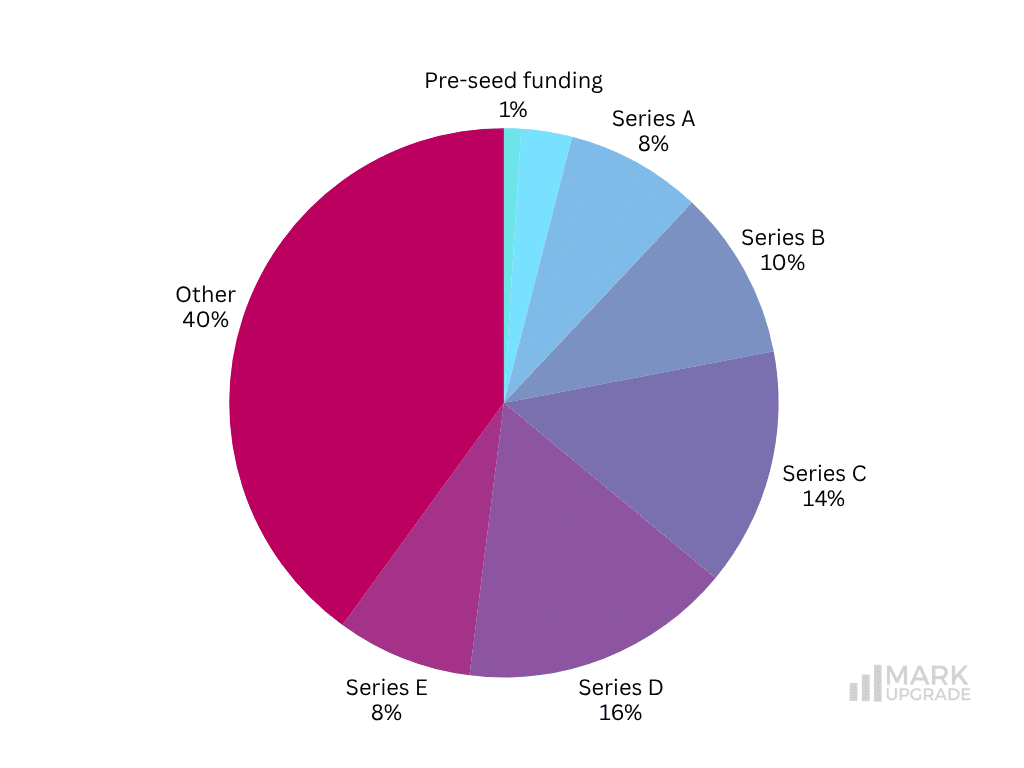
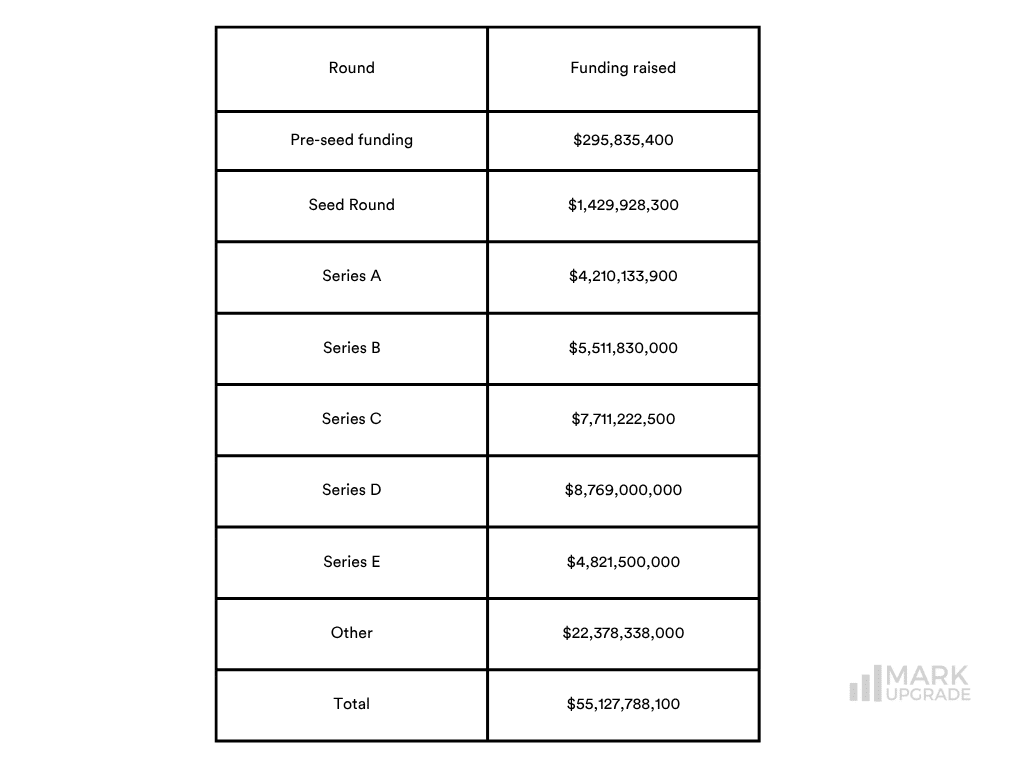
Total monthly funding increased to $55.1 billion from $44.7 billion in August, with much of the additional capital concentrated in later-stage rounds.
September’s largest individual transactions included several multibillion-dollar financings, contributing significantly to the increase in total capital raised.
Key observations
- Pre-seed funding increased by approximately 75%, from $169 million to almost $296 million. Deal volume increased by a smaller 21%, suggesting that the average pre-seed financing was larger in September.
- Seed funding rose from $1.32 billion to $1.43 billion, while deal count increased from 147 to 170. The relatively modest increase in capital compared with the rise in transactions indicates that funding was spread across a larger number of companies.
- Series A was the clearest example of this pattern. Deal volume increased by approximately 21%, but total funding declined slightly from $4.36 billion to $4.21 billion. This suggests smaller average Series A rounds despite greater overall activity.
- Series B remained broadly stable, increasing from $5.39 billion to $5.51 billion alongside a small increase in the number of deals.
- Series C funding climbed sharply from $5.34 billion to $7.71 billion, an increase of approximately 44%, despite deal volume moving only from 34 to 35. The difference points to a much larger average financing size.
- Series D produced one of the strongest changes of the month. Funding rose from $3.64 billion to approximately $8.77 billion even as the number of deals fell from 15 to 13. Large individual transactions therefore had a considerable influence on the September total.
- Series E funding increased from $891 million to $4.82 billion, while deal count rose from 7 to 12. Although Series E remained relatively small by transaction count, several large rounds pushed the category substantially higher.
- Other Funding Rounds declined slightly in value, from $23.60 billion to $22.38 billion, despite deal volume rising from 81 to 110. This suggests that capital outside the traditional funding stages was distributed across more transactions but with less capital committed per deal on average.
Political & Economic Influence (Global)
September remained shaped by geopolitical tension, energy-market disruption and tighter monetary policy. The International Energy Agency reported that more than 10 million barrels per day of Gulf oil production remained offline in August amid heightened security risks, while benchmark North Sea Dated crude prices surged to $113.48 per barrel on 9 September. The IEA also pushed back expectations for a full recovery in Gulf oil supply until 2027, highlighting the continuing impact of regional instability on global energy markets.
In Europe, the European Central Bank raised its three key interest rates by 25 basis points on 10 September, citing continued inflationary pressure linked to the conflict in the Middle East. The ECB projected headline inflation of 3.0% in 2026, while also noting that the euro area economy had proved more resilient than expected.
Impact on funding
Higher energy prices and interest rates kept financing conditions challenging, especially for companies with high capital needs or long paths to profitability. At the same time, economic resilience and continued spending on AI, infrastructure, defense and advanced manufacturing supported investor appetite for strategic sectors. September’s figures reflect this split: capital stayed selective, but investors still committed substantial amounts to established companies and industries with long-term structural demand.
Political & Economic Influence (U.S.)
U.S. economic conditions in September also presented investors with competing signals. Inflation remained elevated, with CPI rising 0.4% in August and 3.4% year over year. Energy prices were a significant contributor, with gasoline up 3.9% during the month and the broader energy index increasing 2.1%.
On 16 September, the Federal Reserve raised the federal funds target range by 25 basis points to 3.75%–4.00%. The Fed described economic activity as expanding at a solid pace, with resilient domestic spending, strong productivity and robust capital investment, but said inflation remained elevated and geopolitical uncertainty was still significant.
Impact on funding
Persistent inflation, higher energy costs and another rate increase kept U.S. financing conditions tight. Higher borrowing costs put pressure on valuations and made investors more cautious toward companies that depend on future growth or repeated rounds of financing.
At the same time, resilient spending, strong productivity and robust capital investment supported the broader funding environment. This helps explain why September still recorded higher overall funding despite tighter monetary conditions, with particularly large amounts flowing into later-stage companies and capital-intensive sectors such as AI infrastructure, aerospace, defense, energy and advanced technology.
Key Investment Sectors in September 2026
Artificial intelligence continued to be the most prominent investment theme in September, appearing across software, cloud computing, cybersecurity, healthcare, biotechnology, robotics, legal technology, analytics and data infrastructure. AI infrastructure in particular continued to attract substantial investment, reflecting the capital required for computing capacity, data centres and the systems supporting increasingly large AI workloads.
Aerospace, space technology and defense were also strongly represented, alongside fintech and financial services, healthcare and biotechnology. Other notable areas included cybersecurity, robotics, semiconductors, energy and advanced manufacturing.
Domain Name Highlights
.com remained the dominant extension, used by 351 of 592 funded companies, or 59%. As the most recognised and trusted domain extension on the internet, .com remains the address customers are most likely to expect and try first when looking for a company online.
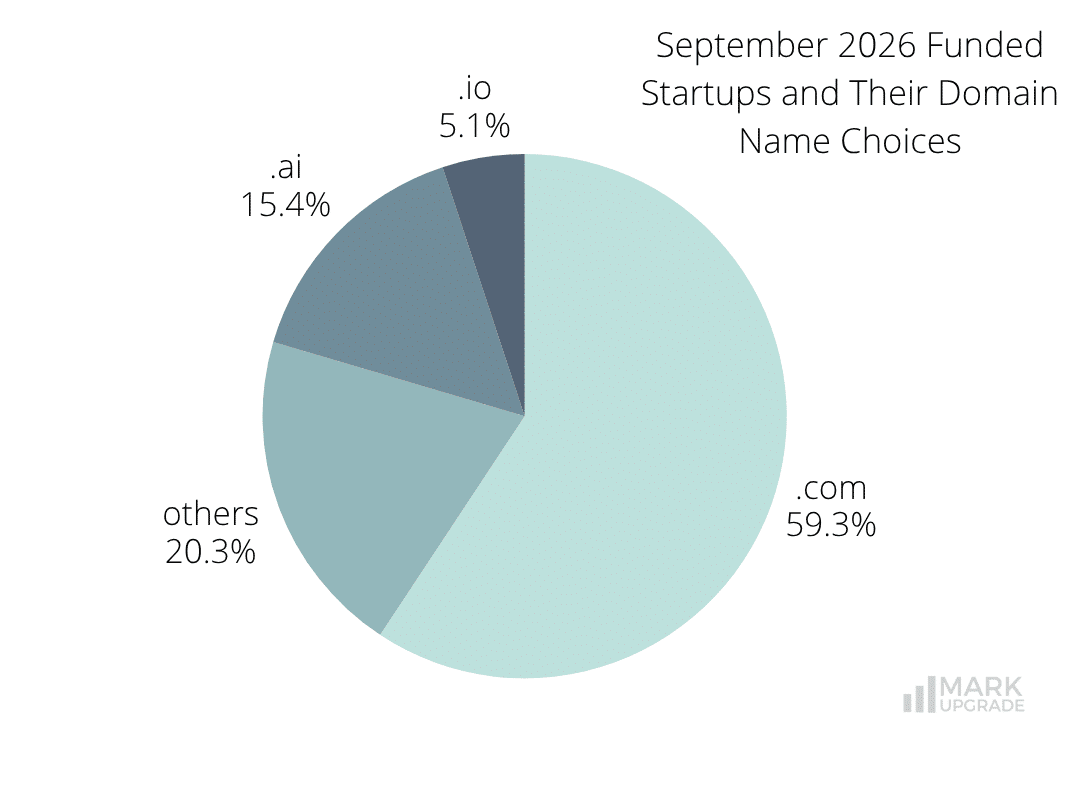
91 companies, or 15%, operated on .ai domain names, while 30, or 5%, used .io. Both extensions remain common among technology-focused startups because of their strong association with innovation and the startup ecosystem. However, .ai can tie a brand closely to artificial intelligence at a time when AI-focused positioning is becoming increasingly common and may lose some of its distinctiveness. .io also carries longer-term uncertainty because it is a country-code domain extension rather than a generic global extension.
The remaining 120 companies, or 20%, used other domain extensions. While these can suit particular markets, sectors or brand strategies, they generally require more effort to build familiarity and can increase the risk of traffic leakage, email confusion or users instinctively trying the corresponding .com.
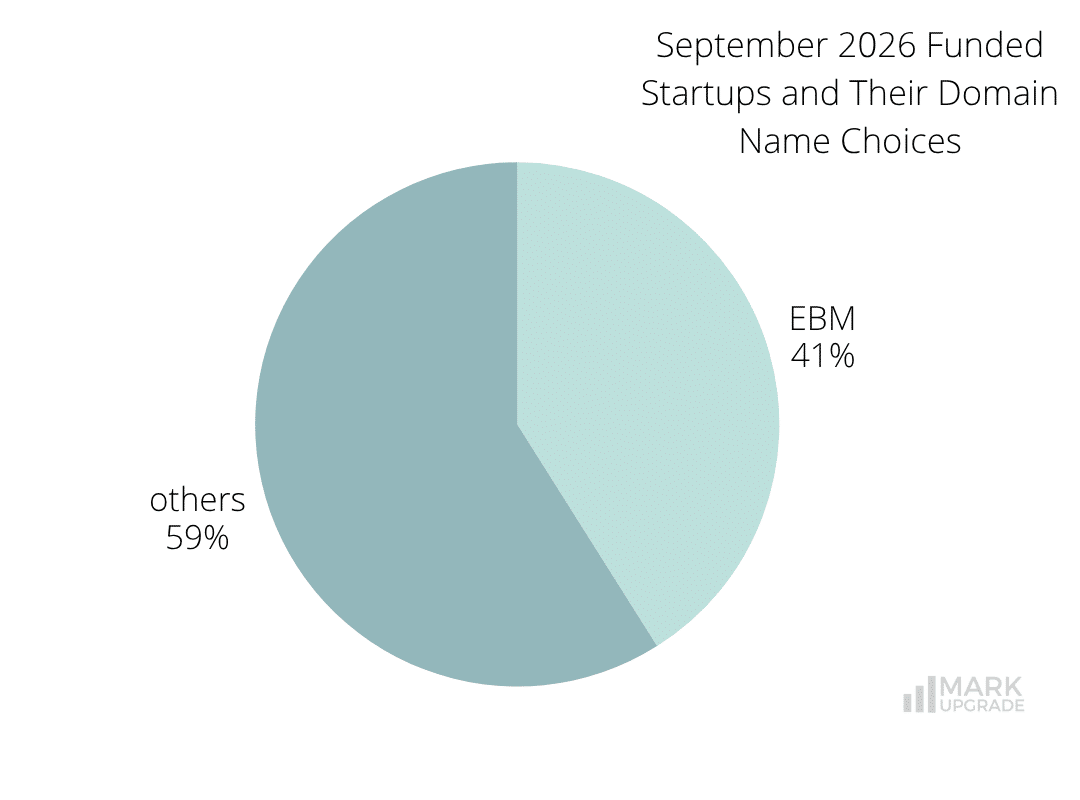
243 companies, or 41%, operated on an Exact Brand Match (EBM) domain name. EBM domains are a natural choice for most internet users when searching for a company online, helping maintain brand consistency, reduce confusion and support a stronger online presence.
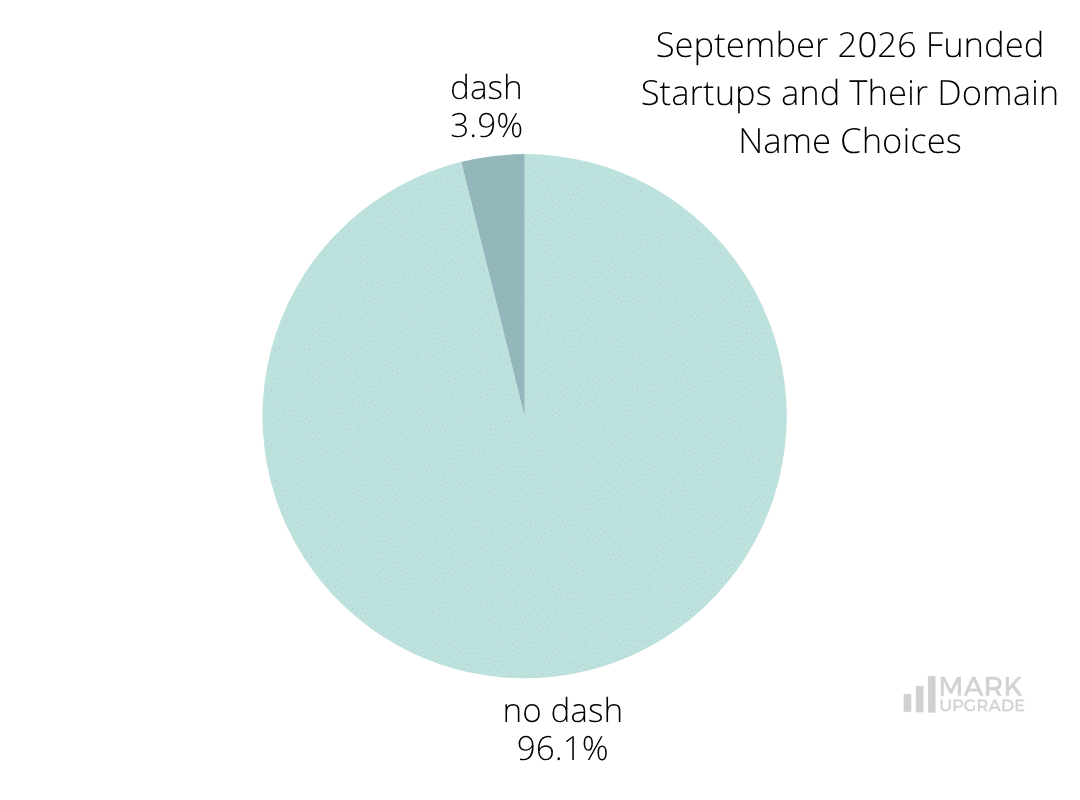
23 companies, or 4%, used a hyphenated domain name. The relatively low share suggests that most funded companies continue to favour simpler domain structures that are easier to remember, type and communicate.
Company Spotlights
Noxtua
Industry: Artificial Intelligence (AI), LegalTech
Funds Raised: €100,000,000 in Series C
Noxtua is a European Legal AI company developing the Noxtua Legal AI Workspace and what it describes as Europe’s largest legal database. Through exclusive partnerships with leading legal publishers across the continent, its platform brings together more than 130 million documents, 8.5 million court decisions and over 250 years of European legal content.
In September, Noxtua closed a Series C of more than €100 million, with German legal publisher C.H.BECK becoming the company’s majority shareholder and Austrian publisher MANZ joining as a new investor. The funding will support continued product development and further expansion across Europe.
We are pleased to be taking the next steps in our expansion together with C.H.BECK and MANZ as investors in our Series C funding round. We are developing Noxtua based on exclusive content from leading legal publishers across the continent, and have already built, among other things, Europe’s largest legal database and Europe’s largest network of independent legal publishers. The joint investment by C.H.BECK and MANZ in Noxtua is therefore also a strong signal to the market.
Dr. Leif-Nissen Lundbæk, CEO and founder of Noxtua
Previously known as Xayn, the company changed its name to Noxtua in 2025, bringing the corporate brand in line with its legal AI platform. Alongside the rebrand, the company secured both Noxtua.ai and Noxtua.com, demonstrating a smart domain strategy that reinforces brand consistency and credibility.

Bird.com
Industry: CRM, Cloud Computing, Business Process Automation, Messaging
Funds Raised: $450,000,000 Debt Financing
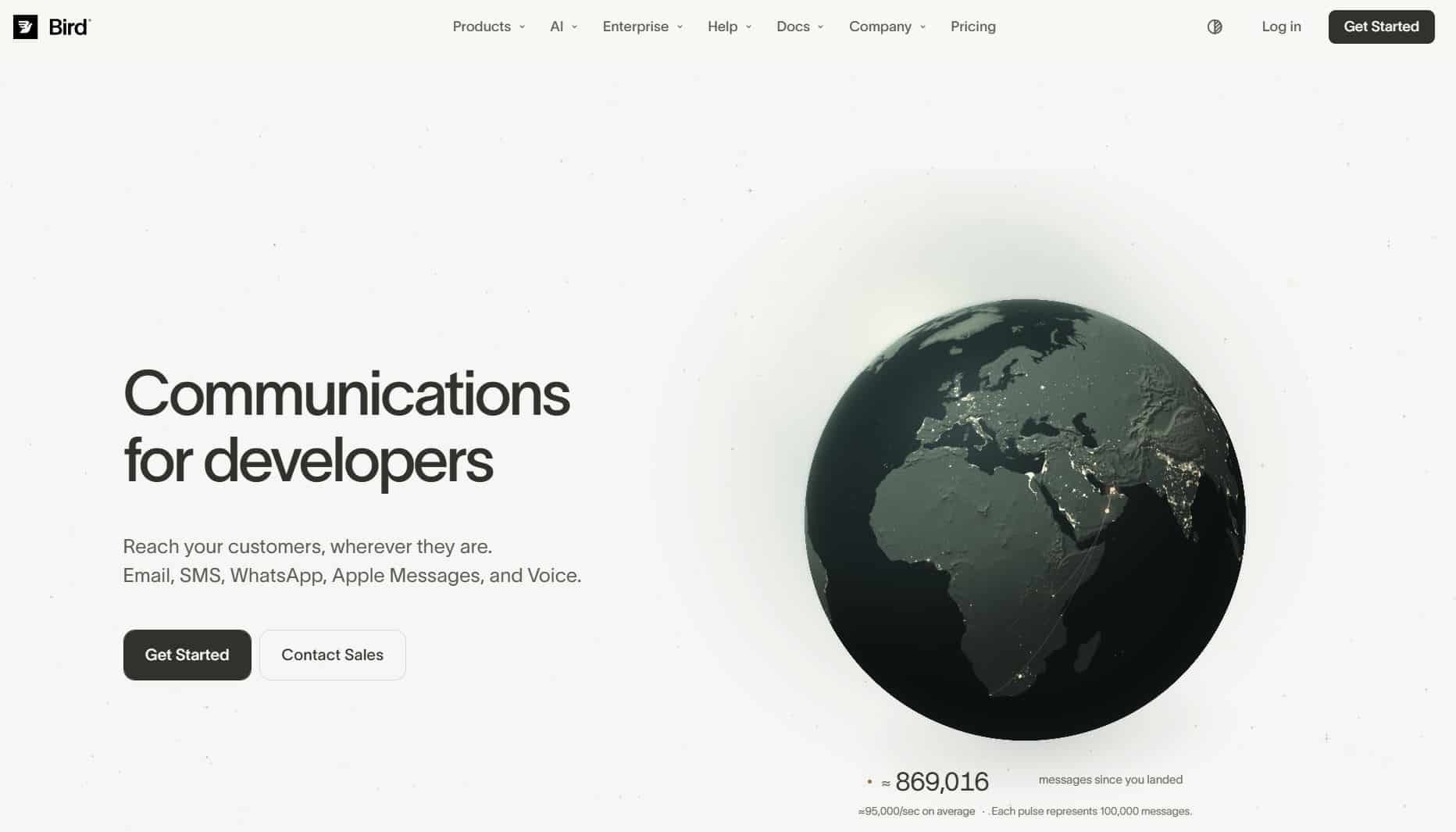
Bird.com is an AI communications infrastructure company founded in 2011 by Robert Vis. The company provides messaging infrastructure used to move trillions of messages each year, with a single API covering email, SMS, WhatsApp, voice and RCS.
In September 2026, Bird completed $450 million in debt financing, led by J.P. Morgan, with Capital One and Citi also participating. The financing included a $400 million term loan and a $50 million revolving credit facility. It was announced alongside a revamped Agentic Harness platform that allows AI agents to send messages, make calls, manage email and interact with Bird’s communications infrastructure directly.
We’re seeing significant growth in agentic AI, and we expect that to keep accelerating as agents transact and communicate on people’s behalf. Bird has built a business combining scale, a lean operating model and sustained profitability. Leading this financing reflects our confidence in Bird’s fundamentals and in Robert’s track record of running a highly efficient, profitable business as it takes on its next chapter.
Shikha Goyal-Allain, Managing Director and Market Executive, Innovation Economy, Commercial Banking at J.P. Morgan
Founded as MessageBird, the company rebranded as Bird in 2024 after expanding beyond the messaging sector to become a broader communications infrastructure platform – having already acquired Bird.com several years earlier.
Dictionary-word .com domains epitomise simplicity, authority and accessibility, all important elements in building consumer trust and brand recognition.
Hubble Network
Industry: Wireless Communications, Satellite Communications, IoT
Funds Raised: $200,000,000 Series C
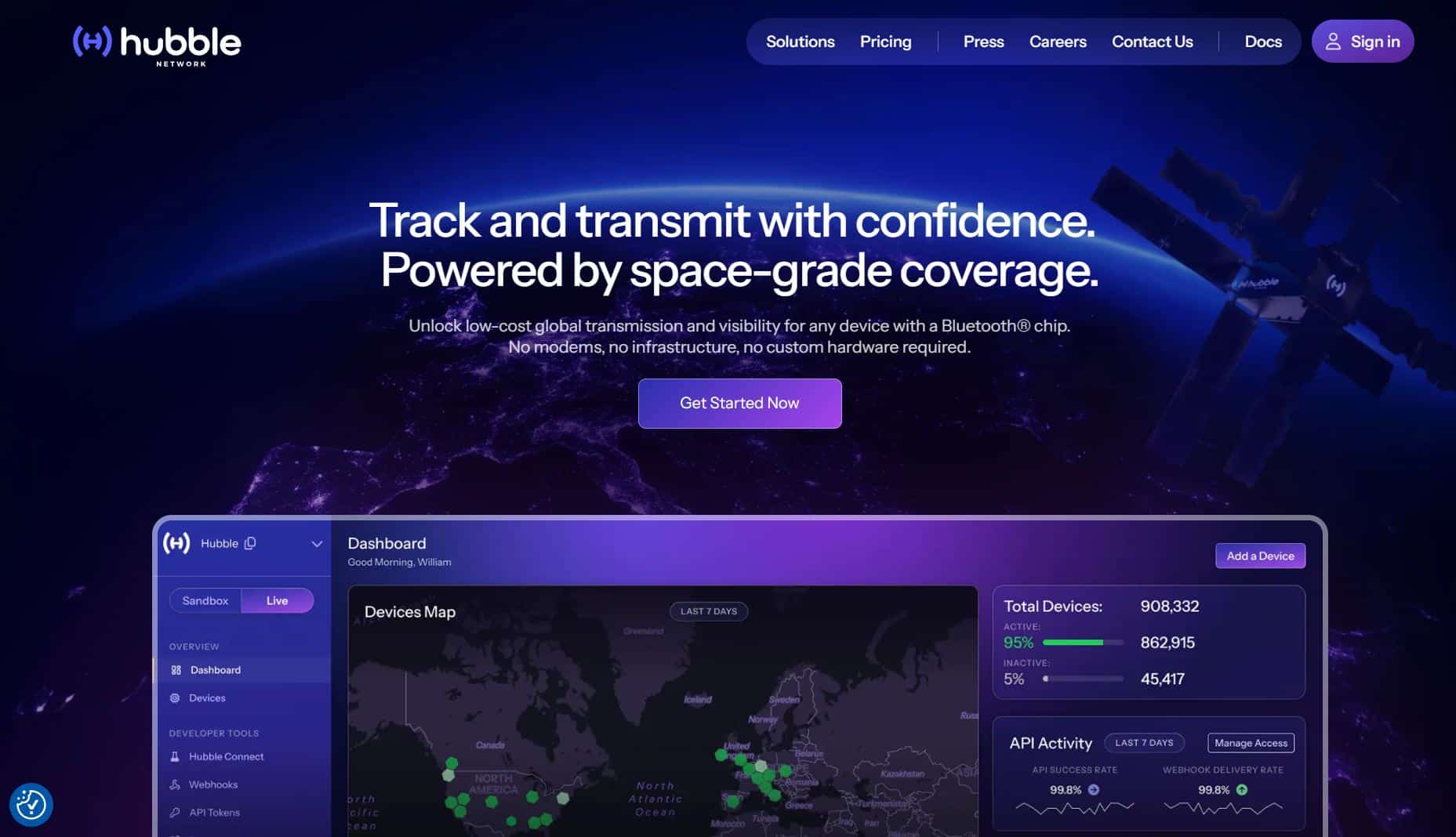
Hubble Network is building a global connectivity network that allows standard Bluetooth Low Energy devices to transmit location and sensor data through terrestrial gateways and satellites, without requiring dedicated satellite hardware. The company currently operates six satellites in low Earth orbit, with plans to expand to 60 satellites by 2030, and says more than 500,000 devices are already active on its network.
In September 2026, Hubble Network raised $200 million in Series C funding at a $1.6 billion valuation, bringing total funding to $300 million. The round was led by Smith Point Capital, with participation from Seraphim, Carthona Capital, Earthshot Ventures, Y Combinator and RPM Ventures. The new capital will support expansion of its satellite constellation and broader deployment of its Bluetooth-to-satellite connectivity platform.
When we said we’d connect Bluetooth chips to satellites, most of the industry said the physics wouldn’t allow it. Today we’re turning that early skepticism into a global opportunity.
Alex Haro, CEO and Co-Founder of Hubble Network
Hubble Network owns both HubbleNetwork.com and Hubble.com, demonstrating a strong domain strategy that supports global visibility, brand trust and a seamless user experience.
Instinct
Industry: AI
Funds Raised: $1,000,000,000 Series C
Instinct is a personal AI assistant designed to handle everyday tasks from start to finish. Users can interact with it by text or phone, and the assistant can use a phone and computer much like a person would. It can help with tasks such as planning trips, sending birthday gifts to friends, ordering groceries, cancelling subscriptions and taking care of a wide range of everyday personal tasks.
In September 2026, Instinct raised $1 billion in Series C funding at a $10 billion valuation from Sequoia Capital, Benchmark and Coatue. The round came only about a month after its previous financing and brought total funding to roughly $1.3 billion.
We’re building Instinct to be the best personal agent that can handle the deeply personal nuances of everyday life. This funding helps us bring Instinct to more people and continue building the future of personal AI. It’s an exciting, creative time, and we’re just getting started.
Noah Shinn, Founder of Instinct
The company operates on Instinct.com, an EBM domain name built around a highly strategic dictionary word. Instinct carries strong associations with intuition, immediacy and natural decision-making, making it a strong fit for an AI assistant designed to act quickly and intuitively on behalf of users.

TEKEVER
Industry: AI, Aerospace, Drones, Defense
Funds Raised: $580,000,000 Series D
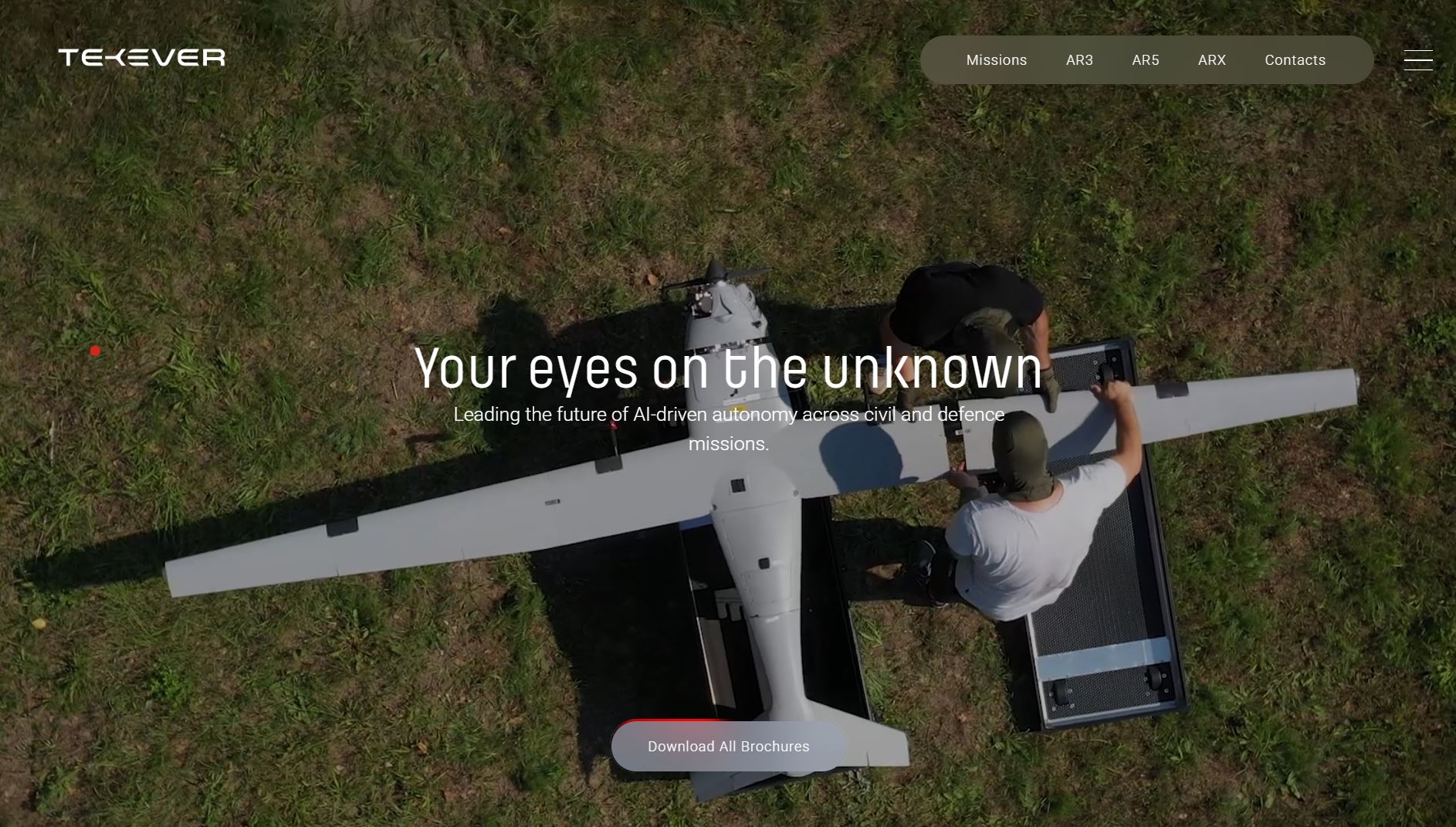
TEKEVER is a European defense technology company developing AI-powered autonomous systems for surveillance, intelligence and security missions. Founded in 2001, the company combines drones, sensors, satellite communications and AI-driven data analysis, with systems already used in demanding operational environments.
In September 2026, TEKEVER raised $580 million in Series D funding at a $6.4 billion valuation. The round was led by UC Investments and Baillie Gifford, with Merlyn Advisors joining alongside existing investors Crescent Cove, Ventura Capital and Iberis Capital. The funding comes as the company continues expanding its manufacturing footprint and autonomous defense capabilities across Europe and other markets.
At UC Investments, we take a long-term view and look for companies with both technical depth and the ability to execute at scale. TEKEVER has built an exceptional technology platform over more than two decades with a proven record of operational success. Our conviction rests on Ricardo and his team, and on the growing weight of European technology in global markets. We are delighted to support TEKEVER in its next phase of international growth.
Jagdeep Singh Bachher, the University of California’s Chief Investment Officer
The name TEKEVER traces back to the company’s original motto, “Technologies for the Evernet,” adopted when it was founded in 2001 by computer scientists and engineers from Lisbon’s Instituto Superior Técnico.
TEKEVER operates on Tekever.com, an EBM domain name that reinforces clarity, trust, and strong brand recognition online.
The right domain name is an important consideration when it comes to building and protecting your brand. If you’re ready to take the next step and invest in a perfect domain name for your business, contact us to learn more about our available options and how we can help you get started.

Other resources
branding business domain domain name domain names domains funding naming
Previous Next